
Knob-and-Tube Wiring in Victoria BC: A Home Buyer's Guide,
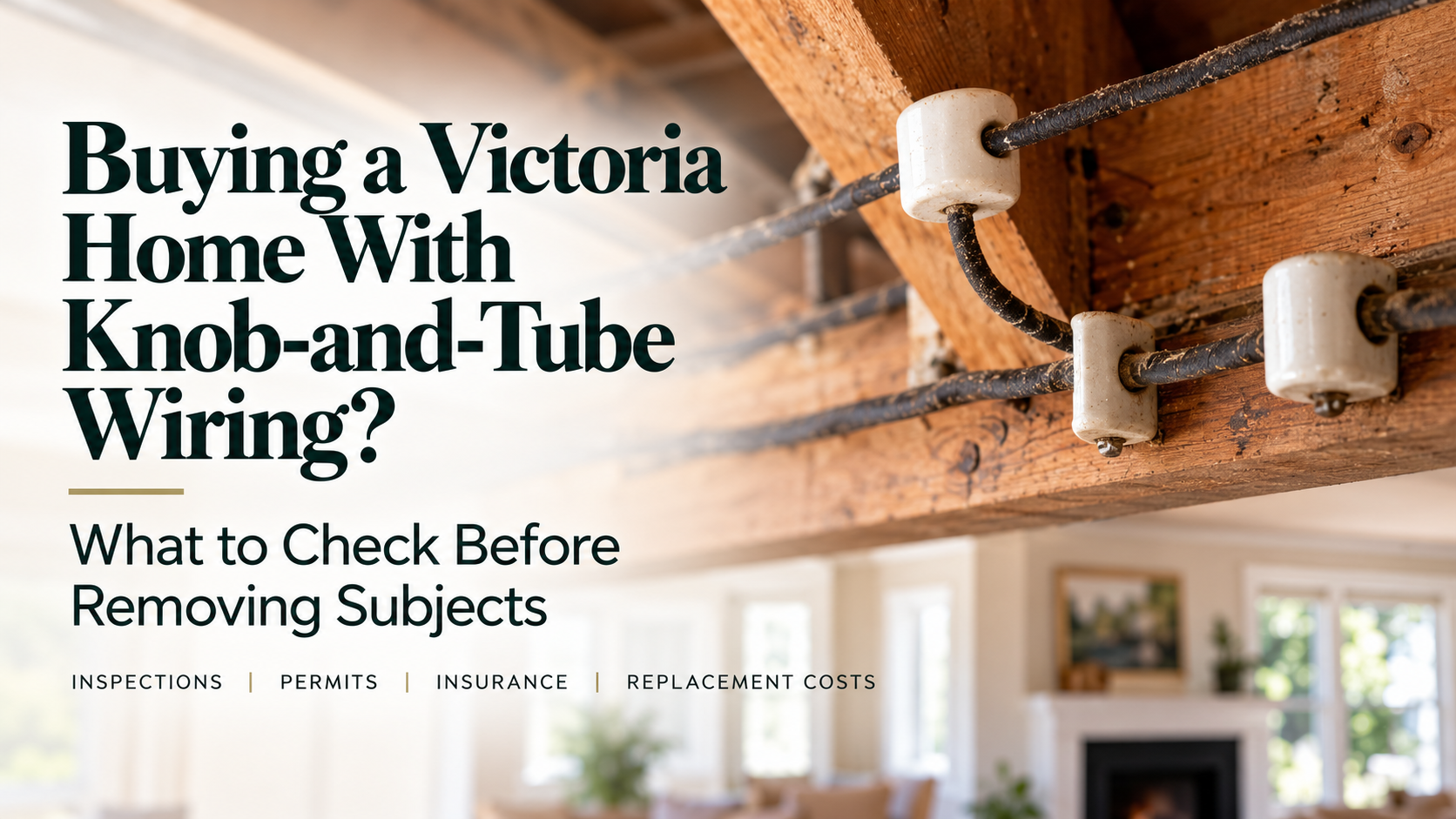
Buying a Victoria Home With Knob-and-Tube Wiring? What I Check Before You Remove Subjects
Victoria's older homes have a lot going for them.
Beautiful wood floors, mature gardens, established neighbourhoods and the character that comes with a house that has been standing for generations can be difficult to reproduce in newer construction.
But older homes can also come with older building systems.
One of the things a home inspector may identify is knob-and-tube wiring.
And when that happens, buyers usually have one immediate question:
Does this mean I shouldn't buy the house?
Not necessarily.
But it does mean there are some important questions I would want answered before my buyer makes a final decision about the property.
What Is Knob-and-Tube Wiring?
Knob-and-tube is an older electrical wiring method found in some homes built during the late 1800s and first half of the 1900s.
The name comes from the ceramic knobs and tubes used to support and protect individual electrical conductors as they passed through and around the wood framing of a house.
In a Victoria home, portions of the system may sometimes be visible in an unfinished basement, crawl space or attic.
But visible wiring only tells us part of the story. Electrical wiring can be concealed inside walls and ceilings, and older homes are often a mixture of original construction and decades of renovations.
Why This Matters in Victoria's Character Neighbourhoods
This is particularly relevant when I'm helping buyers look at older homes in neighbourhoods such as Fairfield, Fernwood, Oak Bay and Esquimalt, as well as older properties elsewhere in Victoria and Saanich.
A century-old house may have been renovated many times.
The kitchen may have new wiring. The electrical panel may have been replaced. A renovated addition may have modern electrical service.
None of those things, by themselves, necessarily tell us what remains elsewhere in the house.
That's why statements such as "the electrical has been updated" should lead to another question:
What exactly was updated?
The Home Inspector Found Knob-and-Tube. What Happens Next?
This is where I don't want my buyer making a decision based on fear or assumptions.
A home inspection is an important starting point, but BCFSA notes that home inspections are primarily visual and may not reveal problems with electrical systems.
When an electrical concern is identified, further investigation by an appropriately qualified electrical professional may be warranted.
1. Determine Whether the Knob-and-Tube Is Still Active
Finding old knob-and-tube wiring doesn't necessarily establish that it is still carrying electricity.
Some homes may contain abandoned sections left behind after electrical upgrades. Others may have a combination of newer wiring and active older circuits.
That's an important distinction.
Rather than guessing from what we can see, I would want an appropriately qualified electrical professional to assess the system and help the buyer understand what is actually present.
2. Find Out How Much of the House Is Affected
One visible section doesn't tell us how much knob-and-tube remains elsewhere.
The house may have been rewired completely, partially or room by room over many years.
I want my buyer to understand whether we're talking about an isolated section or something potentially more extensive.
That distinction can have a significant impact on the scope and potential cost of future work.
3. Don't Assume a New Electrical Panel Means New Wiring
This is an easy assumption to make when touring an older house.
A buyer sees a modern-looking electrical panel and understandably thinks the electrical system has been updated.
The panel is only one component of the system.
A panel upgrade does not, by itself, establish that all of the wiring throughout the house has been replaced.
The same applies to modern receptacles and switches. What we see at the wall doesn't necessarily tell us what wiring is concealed behind it.
I don't think buyers should be frightened by every older system we discover in a house.
I do think they should understand what they're buying.
If an inspection raises a question about knob-and-tube wiring, that's the time to investigate it — while the buyer still has an opportunity to gather information and make an informed decision.
My role isn't to assess the electrical system myself. It's to recognize when more information is needed, help my buyer get the question to the appropriate professional and make sure we don't casually overlook something that could affect the cost or practicality of owning the home.
4. Look for Electrical Permit History
If the seller says the electrical system was upgraded, I also want to understand what work was completed and whether documentation is available.
For properties within the City of Victoria, permit history can be particularly useful.
The City's online property information tools can provide basic property information as well as available building, plumbing and electrical permit history.
Permit records won't necessarily answer every question about an older home. Records can vary depending on the property and the age of the work.
But when permits are available, they can provide useful context about previous upgrades.
5. Understand What "Updated Electrical" Really Means
This phrase deserves a little detective work.
I may want to know:
- When was the work completed?
- What portions of the house were rewired?
- Was the electrical panel replaced?
- Does any active knob-and-tube remain?
- Were electrical permits obtained where required?
- Are invoices or other records available?
- Has a qualified electrical professional assessed the current system?
The City of Victoria currently requires electrical permits for many types of electrical work, including new wiring, removal of portions of an electrical system and work involving utility connection or reconnection. :chatgpt-content-reference{index="2"}
6. Check the Insurance Before Removing Subjects
Insurance is another important part of the investigation.
Buyers shouldn't assume that every insurer will treat an older electrical system in exactly the same way.
An insurer may want more information about the electrical system, an inspection or confirmation of work that has been completed. Requirements and underwriting decisions can vary.
That's why I encourage buyers to speak directly with their insurance professional about the specific house they're considering.
The question isn't simply:
"Can houses with knob-and-tube be insured?"
The more useful question is:
"Can I obtain satisfactory insurance for this particular property, and are there conditions attached to that coverage?"
7. Get a Property-Specific Estimate if Work Is Recommended
If an electrical professional recommends replacement or additional work, I would rather my buyer obtain a realistic estimate than rely on a generic number found online.
The cost can depend on the size and layout of the house, accessibility of the wiring, the amount of older wiring remaining and how much finished wall or ceiling material must be disturbed.
Older Victoria homes can also have plaster walls, decorative trim and other finishes that may make restoration part of the overall project.
Understanding the likely scope of work helps the buyer put the issue into context when evaluating the property and purchase price.
Knob-and-Tube Is Only One Part of the House
This is an important perspective.
A beautiful Fairfield character home with some older wiring may also have a newer roof, upgraded perimeter drains, excellent foundation, updated plumbing and years of thoughtful maintenance.
Another house with completely modern wiring may need substantial work elsewhere.
I don't want my buyer evaluating a house based on one component alone.
We gather the information, understand the likely implications and then consider the issue as part of the overall property, purchase price and buyer's plans for the home.
My Knob-and-Tube Checklist for Victoria Home Buyers
✓ Has knob-and-tube wiring actually been identified?
✓ Is the wiring still active?
✓ How much of the home appears to be affected?
✓ Has some or all of the house already been rewired?
✓ Has a qualified electrical professional assessed the system?
✓ What electrical work is recommended?
✓ Are electrical permits or invoices available for previous upgrades?
✓ Have we checked the municipal permit history where available?
✓ Has the buyer discussed the property with their insurer?
✓ Are there insurance requirements associated with the wiring?
✓ If work is recommended, have we obtained a property-specific estimate?
Frequently Asked Questions
Should I buy a Victoria home with knob-and-tube wiring?
The presence of knob-and-tube wiring alone doesn't determine whether a home is a suitable purchase. Buyers should determine whether the wiring is active, obtain appropriate professional advice, investigate insurance and understand any recommended work and potential costs before making their decision.
Does a new electrical panel mean the knob-and-tube has been replaced?
Not necessarily. An electrical panel can be upgraded while older wiring remains elsewhere in the house. Buyers should clarify what work was actually completed rather than relying on the appearance of the panel alone.
Can knob-and-tube wiring be hidden inside the walls?
Yes. Some wiring may be concealed inside walls and ceilings. Because a standard home inspection is primarily visual, additional assessment by an appropriately qualified electrical professional may be advisable when an electrical concern is identified.
Can I insure a Victoria house with knob-and-tube wiring?
Insurance underwriting varies. An insurer may request information about the electrical system or impose particular requirements before offering coverage. Buyers should discuss the specific property with their insurance professional before removing an insurance-related subject or otherwise relying on coverage being available.
How can I find out whether electrical upgrades were permitted?
Municipal permit records can help. For properties in the City of Victoria, available building, plumbing and electrical permit history can be searched through the City's property information resources. Other Greater Victoria municipalities have their own processes, so the appropriate municipality should be checked for the property being purchased.
Should I get an electrical quote before removing subjects?
If an electrical assessment identifies work that could represent a meaningful future expense, obtaining a property-specific estimate during the buyer's due-diligence period can help the buyer understand the potential cost before making a final purchasing decision.
Helpful Victoria and BC Buyer Resources
- BC Financial Services Authority — The Home Search and Due Diligence
- City of Victoria — Accessing Property Permit Records
- City of Victoria — Electrical Permits
Thinking About Buying an Older Home in Victoria?
Older homes can be wonderful purchases, but they deserve thoughtful due diligence. I help my buyers investigate the property, identify the questions that need answering and coordinate the appropriate professionals so they can make their purchasing decisions with much better information.
Explore Victoria Real Estate with DawnDawn Stokkeland | REALTOR®
eXp Realty
Serving Victoria, Saanich, Gordon Head, Cordova Bay, Cadboro Bay, Oak Bay, Fairfield, Fernwood, Esquimalt, Royal Oak, Sidney and Greater Victoria.
Categories
Recent Posts









REVIEWS