
Selling a Home After a Spouse Dies in BC | Victoria Guide
Victoria BC Seller & Downsizing Guide
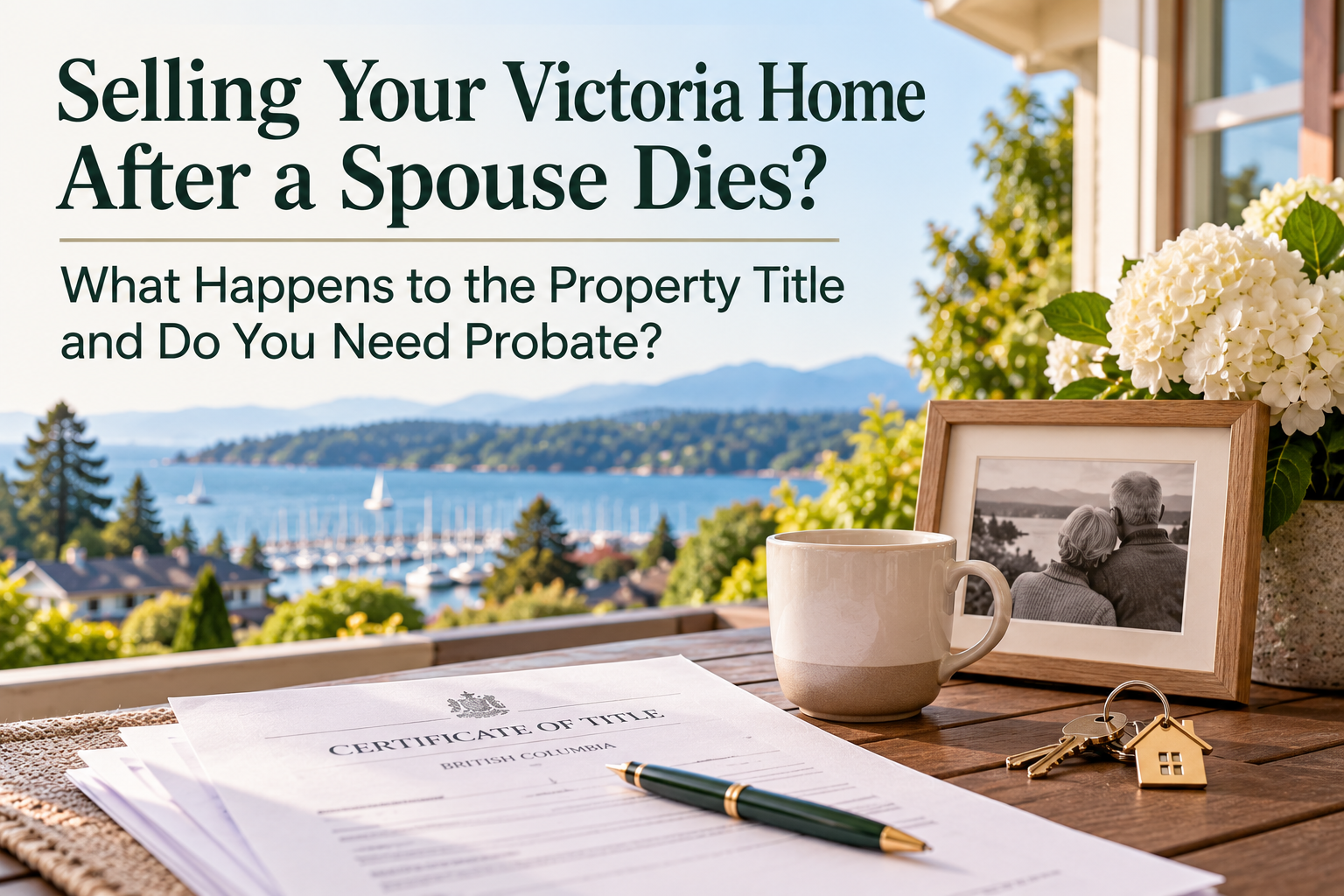
Selling Your Victoria Home After a Spouse Dies: What Happens to the Property Title?
Losing a spouse changes so much about everyday life. For many people, the family home becomes both a source of comfort and a reminder of everything they've shared.
Perhaps you've lived in your Gordon Head home for 30 or 40 years. Your children have grown up and moved out, and maintaining a larger property is becoming more work than you'd like.
You've started thinking about something smaller, perhaps a townhouse in Broadmead or a rancher in Sidney.
But there's one question you haven't been sure how to answer:
“My spouse's name is still on the house. Can I sell it, or do I need probate first?”
The answer depends largely on how the property is registered on title.
You don't automatically need probate simply because your spouse's name remains on the property title. The first step is to determine whether you owned the home as joint tenants or tenants in common.
Why the Type of Property Ownership Matters
When two people purchase a home together in British Columbia, the ownership is typically registered in one of two ways:
- Joint tenancy
- Tenancy in common
These terms may sound similar, but they can lead to very different outcomes when one owner passes away.
1. If You Owned the Home as Joint Tenants
Many married couples purchase their family home as joint tenants.
Joint tenancy includes something called the right of survivorship.
Generally, when one joint tenant dies, their ownership interest passes automatically to the surviving joint tenant.
This means that the deceased spouse's interest in the property ordinarily does not need to pass through probate before the surviving spouse can become the registered sole owner.
However, the property title still needs to be updated.
How Do You Remove Your Deceased Spouse's Name From Title?
The Land Title and Survey Authority of British Columbia (LTSA) provides a process called Transmission to Surviving Joint Tenant.
This allows an eligible surviving owner to apply to update the title following the death of another joint tenant.
The application generally requires a copy of the current title, an accepted death certificate or other acceptable proof of death, and the required land title forms. Check the LTSA's current instructions for the precise requirements.
The LTSA offers an online application for eligible individuals, although a lawyer or notary can also assist with the process.
If you're unsure about the ownership arrangement or there are unusual circumstances, obtaining legal advice before submitting an application is important.
You can find the official instructions here: LTSA – Transmit Ownership to Surviving Joint Tenant.
2. If You Owned the Home as Tenants in Common
Tenancy in common works differently.
Each owner holds a separate ownership interest in the property. Those interests may be equal or unequal.
When one owner dies, their share does not automatically transfer to the surviving co-owner.
Instead, the deceased owner's interest generally becomes part of their estate.
That means the executor or estate administrator may need to obtain a grant of probate or administration and complete the appropriate land title procedures before the property can be transferred or sold.
The surviving spouse may already own their share of the home, but that does not necessarily give them authority to sell the deceased spouse's share.
A BC estate lawyer should review the title, will and estate circumstances to determine what is required.
Joint Tenancy vs. Tenancy in Common: What's the Difference?
| Question | Joint Tenancy | Tenancy in Common |
|---|---|---|
| Does ownership pass automatically to the surviving co-owner? | Generally, yes, through survivorship | No, the deceased's share generally enters their estate |
| Is probate usually needed for the deceased's interest in the property? | Generally not for a straightforward survivorship transfer | Often, depending on estate circumstances |
| Does the registered title need attention? | Yes, through transmission to the survivor | Yes, through the appropriate estate and title procedures |
| Who should confirm the selling authority? | A lawyer or notary | An estate lawyer or qualified legal professional |
These are general distinctions. Trust arrangements, ownership disputes, estate claims and other legal circumstances can change the analysis.
How Do You Find Out How Your Home Is Registered?
You can obtain a current copy of your property's title through the Land Title and Survey Authority of British Columbia.
The title identifies the registered owners and ordinarily indicates whether the property is held in joint tenancy or tenancy in common.
This is one of the first things I would want clarified when helping someone explore selling a property following the death of a spouse.
It's also important to have a legal professional review any unusual title arrangements rather than relying solely on assumptions about how a married couple would normally own a home.
Can You List the Home Before the Title Is Updated?
Possibly, depending on the circumstances.
In some situations, it may be possible to begin preparing the home for sale while the necessary legal work is underway.
However, before entering into a listing agreement or accepting an offer, it's essential to establish who has the legal authority to sign the documents.
Your lawyer or notary should also confirm whether the title can be properly transferred by the proposed completion date.
This is particularly important when probate or estate administration is required, as those processes may affect the timing of a sale.
My advice: If you're considering selling, speak with your legal professional early. Knowing the ownership situation before setting a listing date can help avoid unnecessary stress or delays later.
What If You're Not Ready to Sell Yet?
That's completely understandable.
For many people, deciding whether to leave the family home is not simply a financial decision.
There may be decades of memories attached to the property, and the thought of sorting through belongings, preparing the house for sale and finding somewhere new can feel overwhelming.
You don't have to make all those decisions at once.
Sometimes the most useful first step is simply understanding your options.
You may want to know what your current home could sell for, what smaller properties are available in Greater Victoria, and whether a move would make financial and practical sense.
Those conversations can happen well before you're ready to put a For Sale sign on the lawn.
How I Can Help You Plan the Next Step
As a REALTOR, my role isn't to provide legal advice about probate or estate administration. Those questions belong with a qualified legal professional.
What I can do is help you understand the real estate side of the decision.
That might include preparing a comparative market analysis for your current home, discussing whether any improvements are worth making before selling, estimating your likely selling expenses, and helping you explore suitable homes for your next chapter.
For example, if you're considering leaving a larger home in Gordon Head, Cordova Bay, Cadboro Bay or Oak Bay, we could look at townhouses, ranchers or condos in Broadmead, Royal Oak, Sidney or other neighbourhoods that suit your lifestyle.
The goal isn't to rush a decision. It's to give you the information you need so that, when you're ready, you can move forward with confidence.
A Simple Checklist: Where to Begin
Before Making Plans to Sell
- Obtain a current copy of your property's title.
- Confirm whether ownership was registered as joint tenants or tenants in common.
- Locate the death certificate and any relevant estate documents.
- Speak with a BC lawyer or notary about the title and selling authority.
- Ask whether probate or other estate procedures are required.
- Obtain an estimate of your home's current market value.
- Consider what type of home and lifestyle would suit you next.
- Establish a comfortable timeline without feeling pressured to move before you're ready.
Dawn's Take
When someone loses a spouse, deciding what to do with the family home can be one of the most difficult decisions they face.
The house may hold decades of memories, and even if maintaining it has become challenging, leaving can feel like closing an important chapter.
I believe it's important to give people the time and space to work through those feelings while helping them understand their practical options.
We can begin with something as simple as finding out how the property is registered, connecting with the right legal professional and discussing what the home may be worth.
From there, we can explore whether downsizing makes sense and what your next home might look like. There's no pressure to make a decision before you're ready.
Frequently Asked Questions
Do I need probate to sell my house after my spouse dies in BC?
Not necessarily. If the property was held in joint tenancy, the deceased spouse's interest generally passes to the surviving owner through the right of survivorship. Probate may not be required for that property. If ownership was held as tenants in common, the deceased's share generally becomes part of their estate and probate or administration may be necessary.
How do I remove my deceased spouse's name from property title in BC?
If you held the property as joint tenants, you may be eligible to apply through the LTSA's Transmission to Surviving Joint Tenant process. You will need the required title information and acceptable proof of death. A lawyer or notary can help if the situation is complicated.
Can I sell my house if my deceased spouse's name is still on title?
It may be possible to begin planning the sale, but the legal authority to sign the documents and the required title procedures must be confirmed. A lawyer or notary should establish what must happen before the property can be transferred to a buyer.
How long does probate take in British Columbia?
The timeline varies depending on the estate's complexity, the completeness of the application, court processing and whether disputes arise. If probate is required, discuss the likely timeline with an estate lawyer before committing to a property sale completion date.
Should I get a home valuation before deciding whether to downsize?
Yes, a current market analysis can help you understand your financial options. Knowing what your home may realistically sell for, along with estimated selling costs and the cost of your next property, can make it easier to decide whether moving is right for you.
Helpful Resources
Thinking About Your Next Chapter?
If you're considering selling the family home but aren't sure where to begin, I'm happy to have a conversation.
We can spend 15–20 minutes discussing your situation, what your home may be worth and what options might make sense for you. No obligation and no pressure.
Let's Have a ConversationDawn Stokkeland, REALTOR® | eXp Realty | Victoria, BC
Helping Greater Victoria homeowners navigate selling, downsizing and buying with thoughtful preparation, local market knowledge and a calm, no-pressure approach.
homesbydawn.ca | info@homesbydawn.ca | 778-679-7686
This article is intended for general educational purposes only and does not constitute legal, estate, tax or financial advice. Property ownership, survivorship rights, probate requirements and authority to sell depend on individual circumstances. Consult a qualified BC lawyer or notary before making decisions involving an estate or transferring property ownership.
Categories
Recent Posts



REVIEWS