
Federal Pioneer Stab-Lok Panels in Victoria BC: A Buyer's Guide
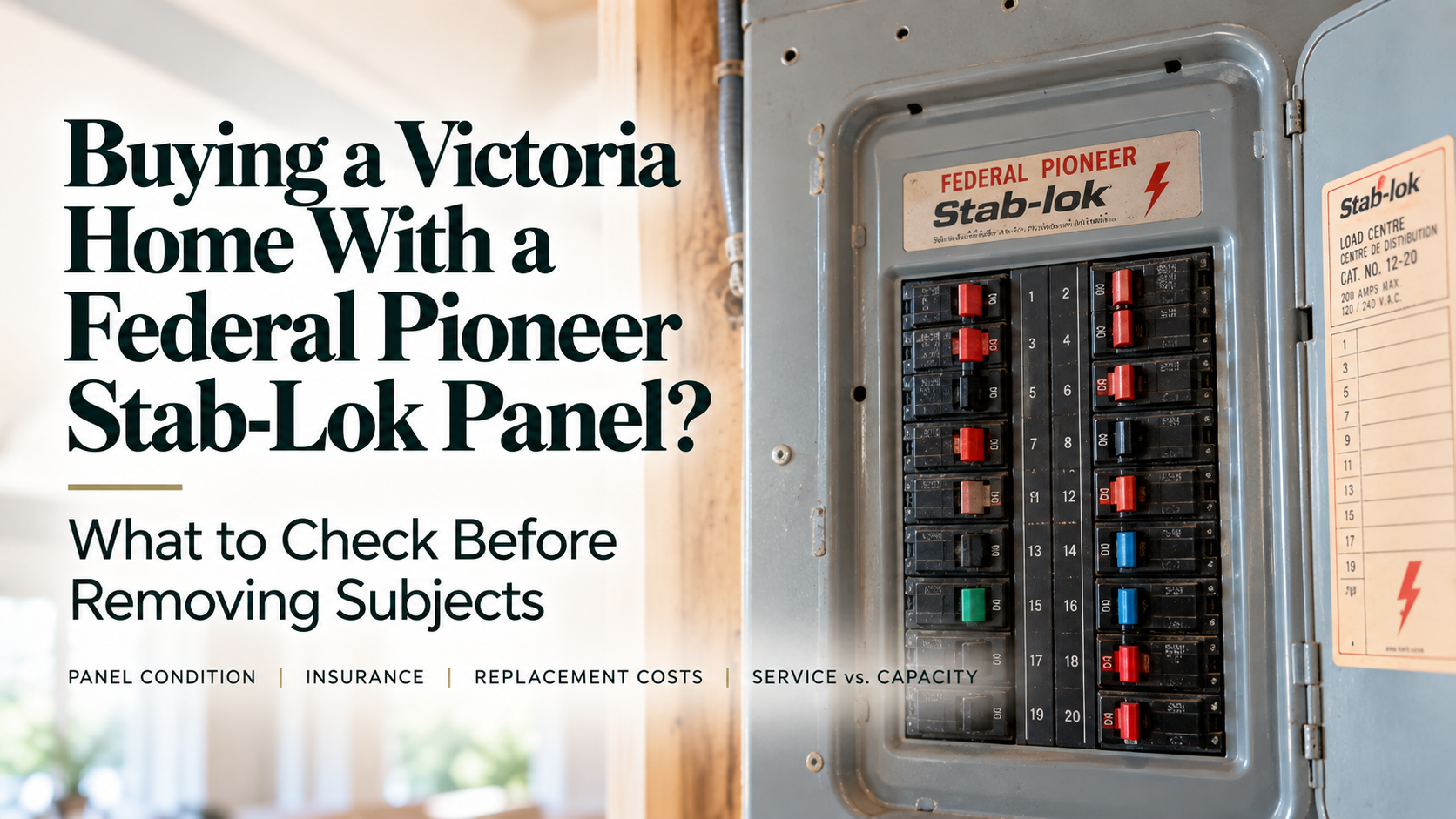
Buying a Victoria Home With a Federal Pioneer Stab-Lok Panel? What to Check Before Removing Subjects
You're buying an older home in Victoria. The house looks well maintained, the inspection is going reasonably well, and then the inspector points out something you may never have heard of:
The house has a Federal Pioneer Stab-Lok electrical panel.
For many buyers, those words immediately sound alarming.
Should you walk away? Does the entire house need to be rewired? Will you be able to get insurance? And if the panel says 200 amps, doesn't that mean the electrical system is already adequate?
These are exactly the kinds of questions that should be investigated while your purchase conditions are still in place.
What Is a Federal Pioneer Stab-Lok Panel?
Federal Pioneer Stab-Lok is a brand of electrical distribution equipment that can be found in older Canadian homes.
In Greater Victoria, where we have a large number of homes built during the 1960s, 1970s and 1980s, buyers may encounter these panels during a home inspection.
The important thing is not to diagnose the panel from something you've read online.
Instead, the goal is to identify exactly what equipment is installed in the house and have an appropriately qualified electrical professional assess its condition and advise you about any recommended work.
Why This Is Particularly Relevant in Gordon Head and Saanich
Many of the detached homes I show buyers in Gordon Head, Saanich, Cordova Bay, Cadboro Bay and Royal Oak were built during decades when electrical systems and household electrical demands looked very different from today.
The same issue can arise in older properties throughout Oak Bay, Fairfield, Fernwood, Esquimalt and Sidney.
A house may have been beautifully renovated over the years while some of its original infrastructure remains.
That's why I don't want buyers judging an electrical system by the renovated kitchen, newer appliances or appearance of the house. We need to look at the actual systems.
The Panel, the Wiring and the Electrical Service Are Not the Same Thing
This is one of the most useful things for buyers of older homes to understand.
People often use the phrase "the electrical" as though it were one single component. It isn't.
There are several different questions we may need to investigate:
- What type of electrical panel is installed?
- What condition is the panel in?
- What type of wiring is present throughout the house?
- What is the home's electrical service capacity?
- Has electrical work been completed previously?
- Are permits or other documentation available?
A concern with the electrical panel does not automatically mean that the entire house needs to be rewired.
Likewise, replacing a panel isn't necessarily the same thing as upgrading the home's electrical service.
1. Identify Exactly What Panel Is Installed
The first step is identification.
If the home inspector identifies a Federal Pioneer or Stab-Lok panel, I want that information clearly documented so that the buyer can take the next appropriate steps.
I wouldn't recommend that a buyer make assumptions about the panel based solely on its age, appearance or information found online.
Electrical systems should be assessed by someone qualified to provide that advice.
2. Have the Panel Professionally Assessed
A standard home inspection is an excellent starting point, but there are times when the inspector may recommend further evaluation by a specialist.
If an electrical panel raises a concern, I would want my buyer to understand whether an electrical professional recommends repair, replacement or further investigation.
The objective isn't simply to ask:
"Is this an old panel?"
A much more useful question is:
"What is the condition of this particular electrical system, and what work—if any—is recommended?"
When something unfamiliar appears in an inspection report, it's very easy for buyers to go online and find information that makes the problem sound frightening.
I'd rather slow the decision down and find out what we're actually dealing with.
If a Federal Pioneer Stab-Lok panel is identified, my job isn't to tell my buyer whether the panel is safe or whether it needs to be replaced. That's a question for the appropriate electrical professional.
My job is to recognize that we have another piece of due diligence to complete, help my buyer ask the right questions and make sure we gather the information needed before the buyer makes a major commitment.
3. Don't Confuse a 200-Amp Panel With the Condition of the Panel
Buyers sometimes see 200 amps on an electrical panel and assume that means there can't be an electrical concern.
Amperage tells us something about electrical capacity. It doesn't, by itself, tell us the age, brand or condition of the equipment.
Conversely, replacing an older electrical panel doesn't necessarily mean the homeowner needs to increase the service from 100 amps to 200 amps.
These are separate questions that should be evaluated based on the particular property and the buyer's future plans.
4. Find Out Whether Other Electrical Work Has Been Completed
Older Victoria homes are often a combination of original construction and decades of improvements.
If the seller says the electrical system has been upgraded, I want to understand what that actually means.
Useful questions may include:
- Was the panel replaced previously?
- Was any of the house rewired?
- When was the work completed?
- Who completed the work?
- Were electrical permits obtained where required?
- Are invoices, permits or other records available?
The phrase "electrical updated" is helpful information, but it isn't the end of the investigation. I want to know what was updated.
5. Check the Permit History Where Appropriate
Municipal records can sometimes help us understand previous electrical work.
For properties within the City of Victoria, available property records can include building, plumbing and electrical permit information.
Other municipalities in Greater Victoria have their own processes for accessing permit information.
Permit records won't necessarily tell us everything about an older house, but when records are available they can add another useful piece to the due-diligence puzzle.
6. Talk to the Insurer Before Removing Subjects
This is a step I don't want buyers leaving until after they've committed to the purchase.
Insurance companies establish their own underwriting requirements, and older electrical equipment can result in additional questions about a property.
That does not mean I would automatically tell a buyer that a house with a Federal Pioneer Stab-Lok panel cannot be insured.
Instead, I want the buyer to contact their insurance professional and provide the details of the specific property and electrical system.
The insurer can then explain what information or work, if any, may be required for coverage.
7. Get a Property-Specific Replacement Quote if One Is Recommended
If an electrical professional recommends replacing the panel, the next thing I want is useful information about the potential cost.
An online estimate isn't nearly as valuable as a quote based on the actual house.
The scope may depend on the existing equipment, service capacity, location of the panel, current electrical installation and whether other work is required.
Once the buyer understands the likely cost, we can put that information into context with the purchase price and the rest of the property's condition.
Does Finding a Stab-Lok Panel Mean You Should Walk Away?
Not based on the name of the panel alone.
I prefer to look at the whole property.
Imagine two homes.
Which is the better purchase?
You can't answer that from the electrical panel alone.
That's why I want buyers to understand individual issues without losing sight of the overall house, location, purchase price and future costs.
What If You're Selling a Victoria Home With a Stab-Lok Panel?
This isn't only a buyer issue.
If you're preparing an older Victoria or Saanich home for sale, understanding your electrical system before listing can help avoid surprises during a buyer's inspection.
That doesn't mean I automatically recommend replacing an electrical panel before selling.
It means I want to understand what is there, whether professional advice is appropriate and what information we can provide to prospective buyers.
Finding out about an issue before the property goes on the market generally gives a seller more time to understand the options than discovering it in the middle of a buyer's subject-removal period.
My Stab-Lok Checklist for Victoria Home Buyers
✓ What manufacturer and model is the electrical panel?
✓ What is the age and apparent condition of the panel?
✓ Has an appropriately qualified electrical professional assessed it?
✓ Is repair, replacement or further investigation recommended?
✓ What is the home's electrical service capacity?
✓ Has other electrical work been completed in the house?
✓ Are permits or invoices available for previous work?
✓ Have we checked municipal permit history where appropriate?
✓ Has the buyer discussed the specific property with their insurer?
✓ Are there any insurance requirements?
✓ If replacement is recommended, do we have a property-specific estimate?
Frequently Asked Questions
Should I buy a Victoria home with a Federal Pioneer Stab-Lok panel?
The presence of a Federal Pioneer Stab-Lok panel alone doesn't determine whether a home is a suitable purchase. Buyers should have the electrical system appropriately assessed, understand any recommended work, investigate insurance requirements and consider the information in the context of the overall property and purchase price.
Does a Stab-Lok panel mean the entire house needs to be rewired?
Not necessarily. The electrical panel and the wiring throughout the house are separate components of the electrical system. A qualified electrical professional can help determine the condition of the panel and whether any additional electrical work is recommended.
Is replacing an electrical panel the same as upgrading from 100 amps to 200 amps?
No. A panel may sometimes be replaced while maintaining the home's existing electrical service capacity. Increasing the service capacity is a separate consideration and should be assessed based on the property and the home's current and anticipated electrical demands.
Can I insure a Victoria home with a Federal Pioneer Stab-Lok panel?
Insurance underwriting requirements vary. Buyers should provide their insurance professional with information about the specific property and electrical system and confirm whether coverage is available and whether the insurer has any requirements before relying on that coverage.
Does a 200-amp Stab-Lok panel mean the electrical system is fine?
Not necessarily. The amperage describes electrical capacity, while the manufacturer, age and condition of the panel are separate considerations. Buyers should avoid assuming that service capacity alone establishes the condition of the electrical system.
Should I get a replacement quote before removing subjects?
If an electrical professional recommends panel replacement or other significant work, obtaining a property-specific estimate during the buyer's due-diligence period can help the buyer understand the potential expense before making a final purchasing decision.
Helpful Victoria and BC Buyer Resources
- BC Financial Services Authority — Buying a Home
- City of Victoria — Accessing Permit Records
- City of Victoria — Electrical Permits
Considering an Older Home in Victoria?
Older homes can be wonderful purchases, but knowing what to investigate matters. I help my buyers work through the due-diligence process, identify the questions that need answering and involve the appropriate professionals so they can make informed decisions before removing subjects.
Explore Victoria Real Estate with DawnDawn Stokkeland | REALTOR®
eXp Realty
Serving Victoria, Saanich, Gordon Head, Cordova Bay, Cadboro Bay, Oak Bay, Fairfield, Fernwood, Esquimalt, Royal Oak, Sidney and Greater Victoria.
Categories
Recent Posts









REVIEWS