
Closing Costs in Victoria BC: Buyers & Sellers Guide
Closing Costs in Victoria BC: What Buyers and Sellers Need to Budget For
Buying or selling a home in Greater Victoria involves more than the purchase price. There are additional expenses that can make a significant difference to your budget, and some of them may come as a surprise if you haven't planned ahead.
For buyers, closing costs are generally paid in addition to the down payment.
For sellers, expenses such as real estate commission, legal fees and mortgage repayment affect how much money you'll actually receive from the sale.
And if you're selling one home to purchase another, understanding both sides of the transaction is especially important.
Let's look at the costs you should anticipate when buying or selling a home in Victoria, Saanich, Oak Bay, Sidney, Esquimalt and surrounding communities.
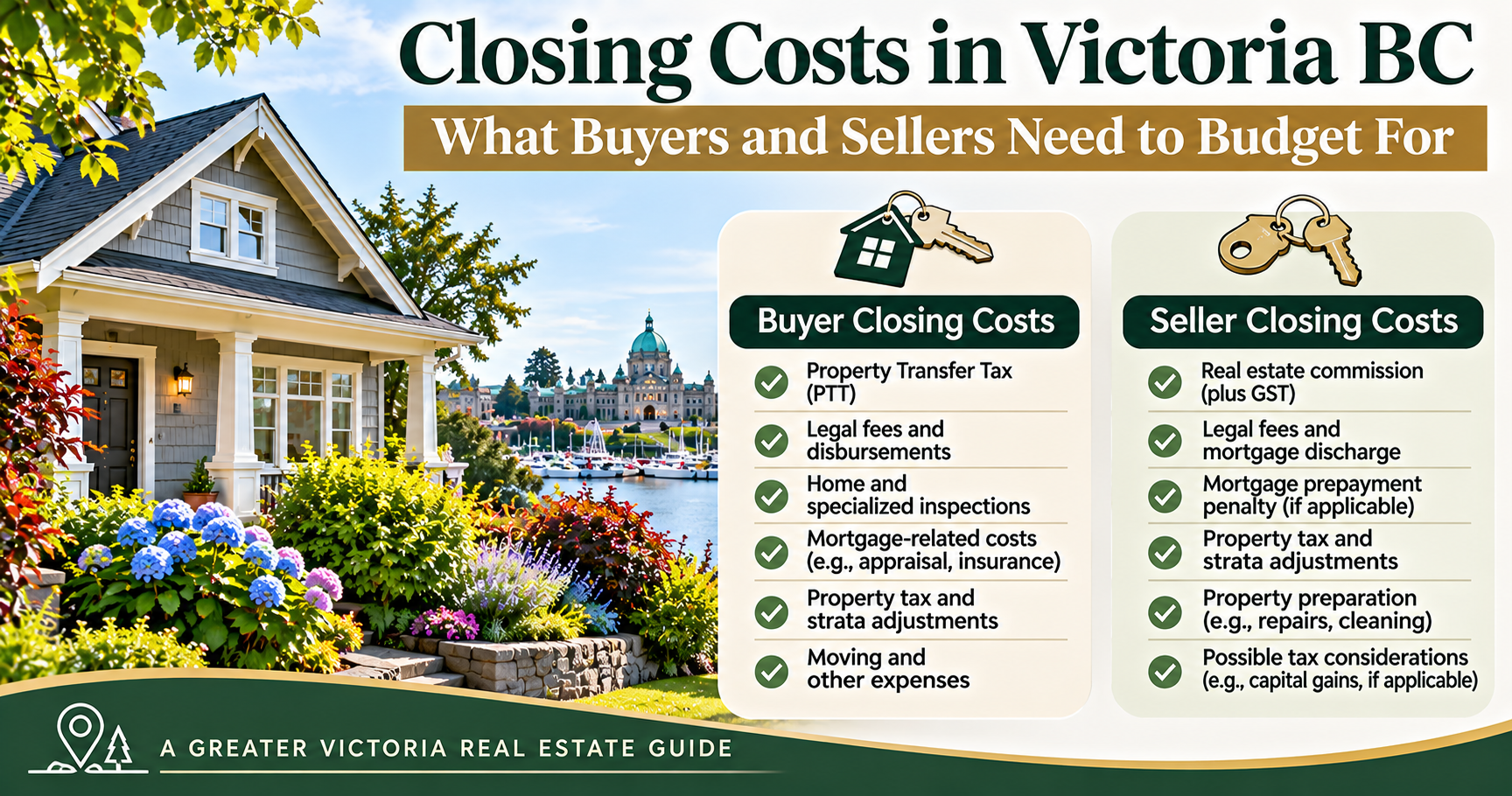
Part 1: Closing Costs for Buyers in Victoria BC
When purchasing a home, buyers need to budget for several expenses beyond their down payment.
Some are required for most purchases, while others depend on the property, financing and inspections.
1. BC Property Transfer Tax
Property Transfer Tax, commonly called PTT, is often one of the largest closing expenses for buyers in British Columbia.
It is generally payable when ownership is registered at the Land Title Office, unless an exemption applies.
The general provincial rates are:
- 1% on the first $200,000 of fair market value.
- 2% on the portion above $200,000 up to $2 million.
- 3% on the portion above $2 million.
- An additional 2% on the residential portion above $3 million.
Additional property transfer tax rules can apply to certain foreign buyers and other transactions.
Examples of BC Property Transfer Tax
| Purchase Price | General Property Transfer Tax |
|---|---|
| $600,000 | $10,000 |
| $750,000 | $13,000 |
| $900,000 | $16,000 |
| $1,000,000 | $18,000 |
| $1,200,000 | $22,000 |
| $1,500,000 | $28,000 |
These figures assume a fully taxable transaction with no exemptions or additional taxes.
For example, if you're buying a $900,000 home in Gordon Head and don't qualify for an exemption, the general Property Transfer Tax would be $16,000.
That is money you'll need to account for in addition to your down payment and other expenses.
You can find the official rates and calculator through the BC Government Property Transfer Tax website.
2. First-Time Homebuyer Property Transfer Tax Exemption
Some eligible first-time homebuyers may qualify for a reduction in Property Transfer Tax.
Under the current BC program, qualifying purchases valued at $500,000 or less may receive a full exemption.
For eligible purchases above $500,000 and up to $835,000, the exemption can be as much as $8,000.
A reduced exemption may be available for qualifying properties valued above $835,000 and below $860,000.
At $860,000 or more, this particular exemption is unavailable.
For example, an eligible first-time buyer purchasing a $750,000 home could reduce the normal $13,000 Property Transfer Tax by $8,000, leaving $5,000 payable.
Eligibility depends on several factors, including residency, previous homeownership, intended use of the property, property size and the ownership interests being transferred.
Not every first-time buyer will qualify.
See the official BC first-time homebuyer exemption amounts.
3. Newly Built Home Property Transfer Tax Exemption
BC also has a separate exemption for eligible newly built principal residences.
The full exemption threshold is $1.1 million, with a partial exemption for qualifying properties valued above $1.1 million and below $1.15 million.
The buyer and property must meet the program's eligibility requirements.
This is different from the first-time buyer exemption, and buyers should have their lawyer or notary confirm which rules apply.
4. GST on Newly Built Homes
Most ordinary resales of previously occupied residential homes are exempt from GST.
However, newly built and certain substantially renovated homes may be subject to 5% GST.
For example, 5% GST on a $900,000 newly built home would be $45,000 before any applicable rebate.
Eligible first-time buyers of newly built homes may qualify for the federal First-Time Home Buyers' GST/HST Rebate.
Under the current program, eligible purchasers may recover up to 100% of the GST on qualifying new homes valued at $1 million or less, to a maximum of $50,000.
The rebate is gradually reduced for qualifying homes valued between $1 million and $1.5 million.
The rules include purchase timing, occupancy and other eligibility requirements.
When purchasing a new home, confirm whether GST is included in the advertised price, whether a rebate applies and how it will be handled under the contract.
Visit the Canada Revenue Agency's first-time homebuyer GST rebate page.
5. Legal Fees and Disbursements
A lawyer or notary typically handles the legal completion of your purchase.
Their work may include reviewing documents, preparing the transfer, registering ownership, arranging mortgage registration and accounting for the funds.
Legal costs vary depending on the firm and complexity of the transaction.
For preliminary budgeting, buyers might allow approximately $1,200 to $2,500 or more, including typical disbursements.
Always request a written quote.
6. Home Inspections
A general home inspection is an important part of buyer due diligence.
Depending on the property's age and condition, additional inspections may be appropriate.
These could include:
- Electrical inspections.
- Plumbing or sewer camera inspections.
- Oil tank investigations.
- Septic system assessments.
- Structural or drainage evaluations.
A general inspection may cost several hundred dollars or more, while specialized inspections are additional.
These expenses are usually paid during the conditional period, before closing, and may still be incurred if the purchase does not proceed.
7. Mortgage-Related Costs
Depending on your financing, additional costs may include:
- Property appraisal fees.
- Mortgage default insurance premiums, where applicable.
- Mortgage broker or lender fees for certain financing products.
- Interest adjustments or other lender-required expenses.
Mortgage default insurance premiums are often added to the mortgage balance rather than paid entirely in cash at completion, subject to lender and insurer requirements.
Your mortgage professional should provide a breakdown of your expected costs.
8. Property Tax and Strata Fee Adjustments
This is an expense buyers sometimes overlook.
At closing, your lawyer or notary prepares a statement of adjustments.
The purpose is to allocate certain expenses fairly between the buyer and seller according to the contract and the relevant payment periods.
For example, if the seller has already paid property taxes covering a period after the adjustment date, the buyer may need to reimburse the seller for the buyer's share.
For strata properties, prepaid strata fees may also require adjustment.
Depending on the timing, adjustments can result in additional funds being required at closing or credits in the buyer's favour.
9. Moving, Insurance and Other Expenses
Buyers should also plan for:
- Moving company or truck rental costs.
- Home insurance beginning when required by the lender and contract.
- Utility setup and account changes.
- Immediate repairs or maintenance.
- New locks and other move-in expenses.
These expenses may not appear on the legal closing statement, but they're still part of the overall cost of moving.
Example: Buying a $900,000 Resale Home in Saanich
Imagine you're purchasing a resale home in Gordon Head for $900,000 and don't qualify for a Property Transfer Tax exemption.
| Expense | Illustrative Amount |
|---|---|
| Property Transfer Tax | $16,000 |
| Legal fees and disbursements | $1,800 |
| Home inspection | $700 |
| Appraisal, if required | $400 |
| Estimated closing adjustments | $1,000 |
| Total | $19,900 |
This is a hypothetical budgeting example, not a quote.
It excludes your down payment, mortgage insurance premiums, moving expenses and other property-specific costs.
The important point is that you'll need sufficient funds for these expenses in addition to your down payment.
Part 2: Closing Costs for Sellers in Victoria BC
Sellers have a different set of expenses.
Instead of paying Property Transfer Tax, sellers generally need to account for real estate commissions, legal fees, mortgage repayment and any applicable penalties or adjustments.
1. Real Estate Commission
Real estate commission is usually one of the largest selling expenses.
Commission rates are negotiable and should be clearly explained in the listing agreement.
There is no mandatory standard commission rate in British Columbia.
The total amount, how it is shared between brokerages and the services included should be discussed before listing.
GST generally applies to real estate commission.
For example, if an agreed total commission were $30,000 before GST, the GST would be $1,500, bringing the total to $31,500.
Ask your REALTOR for a written estimate showing the commission and applicable GST based on your anticipated selling price.
2. Legal Fees and Mortgage Discharge
A lawyer or notary handles the legal completion of the sale.
This generally includes preparing transfer documents, receiving the sale proceeds, arranging payment of registered mortgages and accounting for the remaining funds.
Legal fees and disbursements vary, so sellers should request a quote.
There may also be lender or registration-related mortgage discharge charges.
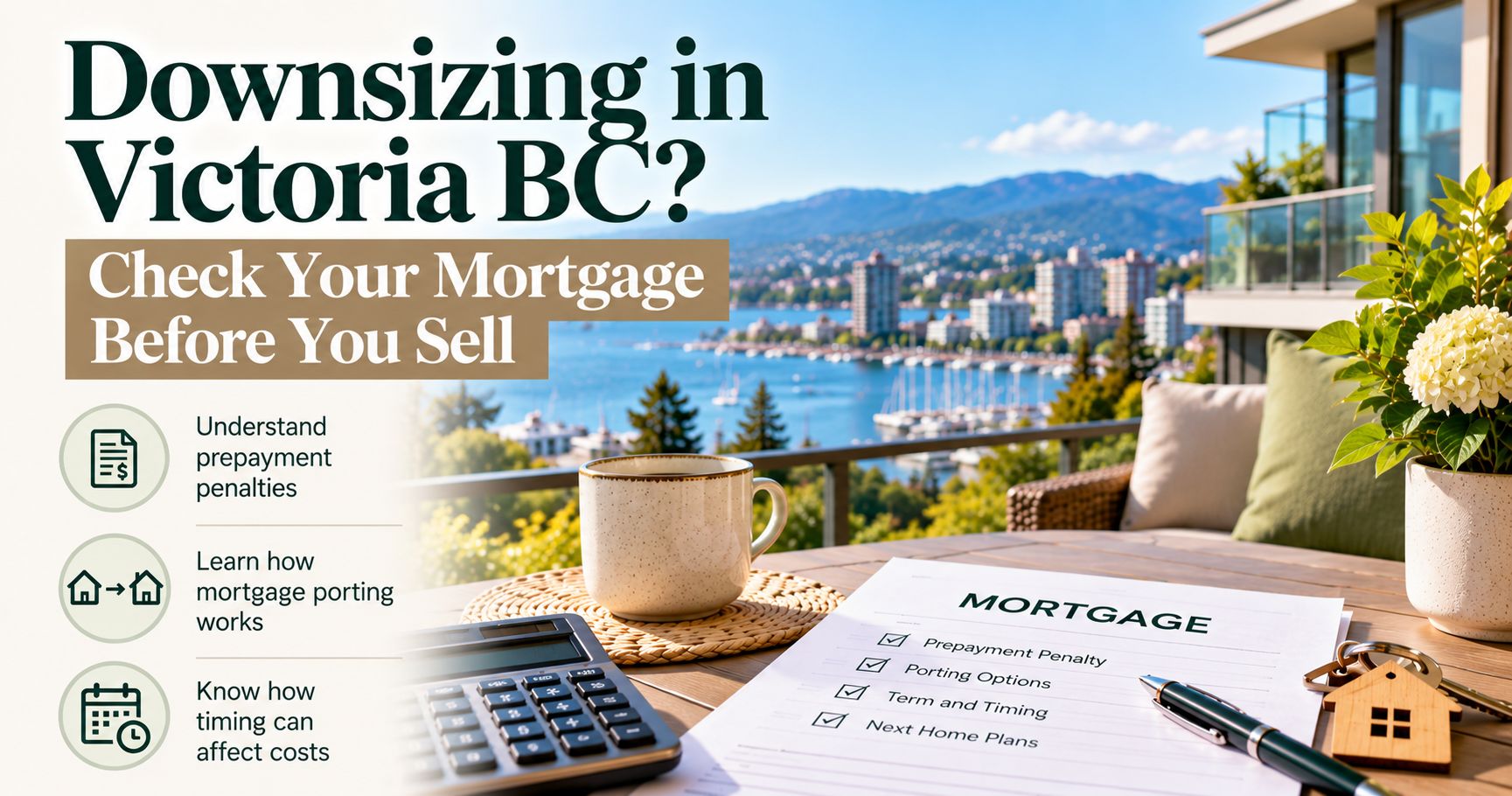
3. Mortgage Prepayment Penalties
This is one of the most important expenses to investigate before listing.
If you're selling before your mortgage term ends, your lender may charge a prepayment penalty.
Depending on the mortgage terms, the penalty could be based on three months' interest, an interest rate differential or another contractual calculation.
Some mortgages can be ported to a new property, subject to lender approval and the mortgage terms.
If you're selling and buying another home, speak with your lender or mortgage broker early.
Ask for a written payout estimate showing the outstanding mortgage balance, accrued interest, any penalty and discharge costs.
The amount you owe may change depending on the completion date.
4. Property Tax and Strata Adjustments
Just as buyers may reimburse sellers for prepaid expenses, sellers may owe amounts relating to their period of ownership.
Property taxes, strata fees and other contractually adjustable expenses are accounted for during the legal completion process.
The final adjustment depends on the dates, amounts paid and terms of the contract.
5. Preparing the Property for Sale
Not every selling expense appears on the final closing statement.
You may spend money before listing on:
- Painting or minor repairs.
- Landscaping and garden maintenance.
- Cleaning and decluttering.
- Professional staging, if appropriate.
- Pre-listing inspections or specialist assessments.
- Moving and storage.
Not every improvement produces a worthwhile return.
It's sensible to discuss priorities before spending money on upgrades that may not significantly improve your sale outcome.
6. Possible Tax Considerations
For many sellers, the sale of a qualifying principal residence may be fully exempt from capital gains tax.
However, the sale generally still needs to be reported appropriately for income tax purposes.
Additional tax considerations can arise with investment properties, rental use, changes in use, short-term ownership and non-resident sellers.
BC's home flipping tax and federal residential property flipping rules may also be relevant to some short-term sales, subject to exemptions and specific requirements.
Sellers with these circumstances should obtain advice from a qualified tax professional before listing.
Example: Selling a $1.2 Million Home in Oak Bay
Imagine a homeowner sells a property for $1,200,000.
For illustration only, we'll assume an agreed total commission of $30,000 plus GST, legal expenses of $1,500 and an outstanding mortgage payout of $400,000.
| Item | Amount |
|---|---|
| Sale price | $1,200,000 |
| Illustrative commission | -$30,000 |
| GST on commission | -$1,500 |
| Legal fees and disbursements | -$1,500 |
| Mortgage payout | -$400,000 |
| Estimated remaining proceeds | $767,000 |
This example excludes any mortgage prepayment penalty, discharge charges, closing adjustments, preparation costs and applicable taxes.
It is not a statement of the actual commission charged by any brokerage.
The important distinction is that your sale proceeds are calculated after the relevant expenses and debts have been accounted for.
Part 3: Selling One Home and Buying Another
This is where careful financial planning becomes especially important.
Perhaps you're selling your family home in Gordon Head and purchasing a townhome in Royal Oak.
Or you're downsizing from a detached home in Cordova Bay to a condo in Sidney.
You may have significant equity in your current property, but that doesn't necessarily mean the full amount will be available for your next purchase.
Before committing to a new home, you'll want to know:
- How much your existing mortgage payout will be.
- What your selling commission and legal expenses will total.
- Whether there is a mortgage prepayment penalty.
- How much Property Transfer Tax applies to your new purchase.
- What other purchase closing costs you need to cover.
- When your sale proceeds will be available.
- Whether bridge financing or another arrangement may be necessary.
Completion dates matter.
If you're relying on the proceeds from your sale to fund your next purchase, the timing needs to be coordinated carefully with your lender and legal professional.
For many transactions, arranging the sale completion before the purchase completion can help, but the appropriate schedule depends on the circumstances and how quickly funds can be transferred.
The purchase and sale contracts should be reviewed together before finalizing the dates.
Part 4: Completion, Possession and Adjustment Dates
In British Columbia, there are three important dates to understand.
Completion Date
The completion date is generally when the legal transfer of ownership and payment of the purchase price take place.
Possession Date
The possession date is when the buyer is entitled to take possession of the property under the contract.
These dates are not necessarily the same.
Adjustment Date
The adjustment date is used to allocate expenses such as property taxes and strata fees according to the contract.
Understanding all three dates helps you plan your financing, insurance arrangements, moving schedule and closing costs.
Part 5: Closing Cost Checklist
For Buyers
- Confirm your down payment and financing requirements.
- Calculate BC Property Transfer Tax.
- Check eligibility for available exemptions or rebates.
- Confirm whether GST applies to the purchase.
- Request a legal fee estimate.
- Budget for inspections and appraisal costs.
- Allow for property tax and strata adjustments.
- Set aside money for moving and immediate expenses.
- Confirm when closing funds must reach your lawyer or notary.
For Sellers
- Request a written commission estimate, including GST.
- Obtain your mortgage payout and penalty estimate.
- Request a legal fee and discharge cost estimate.
- Allow for closing adjustments.
- Budget for agreed repairs or preparation expenses.
- Confirm whether tax issues require professional advice.
- Calculate your expected net sale proceeds.
- Coordinate completion and possession dates if purchasing another home.
Dawn's Take: Know Your Numbers Before You Commit
One thing I always encourage my clients to do is look at the full financial picture before making a decision.
For buyers, it's not just about having enough money for the down payment. There are other expenses that need to be accounted for, and Property Transfer Tax can be a significant one.
For sellers, I think it's equally important to understand how much money will actually be left after the mortgage, commission and other expenses have been paid.
This becomes especially important when you're selling one home to buy another.
I like to work through the numbers early so there aren't unexpected surprises when we're approaching completion.
And if there are questions about mortgage penalties, taxes or legal expenses, I encourage clients to get the answers from the appropriate professionals before making a commitment.
Buying or selling a home is a big financial decision. The more clearly you understand the numbers, the more confidently you can move forward.
Frequently Asked Questions About Closing Costs in Victoria BC
How much are closing costs when buying a home in Victoria BC?
Closing costs depend on the purchase price, property type, financing and applicable exemptions. Buyers commonly budget for Property Transfer Tax, legal fees, adjustments, inspections and possible mortgage-related costs. The down payment is additional.
Does the buyer or seller pay Property Transfer Tax in BC?
The buyer generally pays Property Transfer Tax when ownership is registered, unless an exemption applies. Sellers do not normally pay Property Transfer Tax simply because they are selling their property.
Do first-time homebuyers pay Property Transfer Tax in BC?
Some eligible first-time buyers receive a full or partial exemption. The amount depends on the property's fair market value, ownership interests and other program requirements. Not every first-time buyer qualifies for a complete exemption.
What closing costs does a seller pay in Victoria BC?
Common selling costs include negotiated real estate commission plus GST, legal fees, mortgage discharge expenses, possible mortgage prepayment penalties and applicable closing adjustments. Property preparation and moving expenses may also apply.
Can I use the money from selling my home to buy another property?
Yes, many homeowners use their net sale proceeds toward their next purchase. However, completion dates, mortgage payouts and the timing of funds must be coordinated carefully with the lender and legal professionals.
Are closing costs included in my mortgage?
Generally, buyers need to have funds available for closing costs in addition to their down payment. Certain mortgage-related charges may be financed depending on the product, but buyers should not assume Property Transfer Tax, legal fees and adjustments can be added to their mortgage.
Planning to Buy or Sell in Greater Victoria?
Whether you're purchasing your first condo in Victoria, selling a family home in Saanich, moving to Oak Bay or downsizing to Sidney, understanding your costs is an important part of planning.
I can help you prepare a realistic buying or selling budget, understand the timing of your transaction and identify the questions to ask your mortgage and legal professionals.
My approach is simple: clear information, thoughtful guidance and no pressure.
Let's Work Through the Numbers
Thinking about buying or selling in Greater Victoria?
We can start with a 15–20 minute conversation about your plans, expected costs and what your next move might look like.
No pressure. Just practical guidance to help you make an informed decision.
Connect With DawnOfficial Resources
- BC Property Transfer Tax
- BC First-Time Homebuyer Exemption
- BC Newly Built Home Exemption
- CRA First-Time Home Buyers' GST/HST Rebate
- BC Financial Services Authority
Disclaimer: This article provides general educational information as of November 2026. Tax rules, exemptions, fees and eligibility requirements can change. Examples are illustrative and are not quotes or individualized financial advice. Actual closing costs depend on the property, contract, financing and personal circumstances. Buyers and sellers should confirm their figures with their lawyer or notary, mortgage professional and tax adviser where appropriate.
Categories
Recent Posts





REVIEWS