
Buying an Older Condo in Victoria BC? Building Envelope Guide
```html
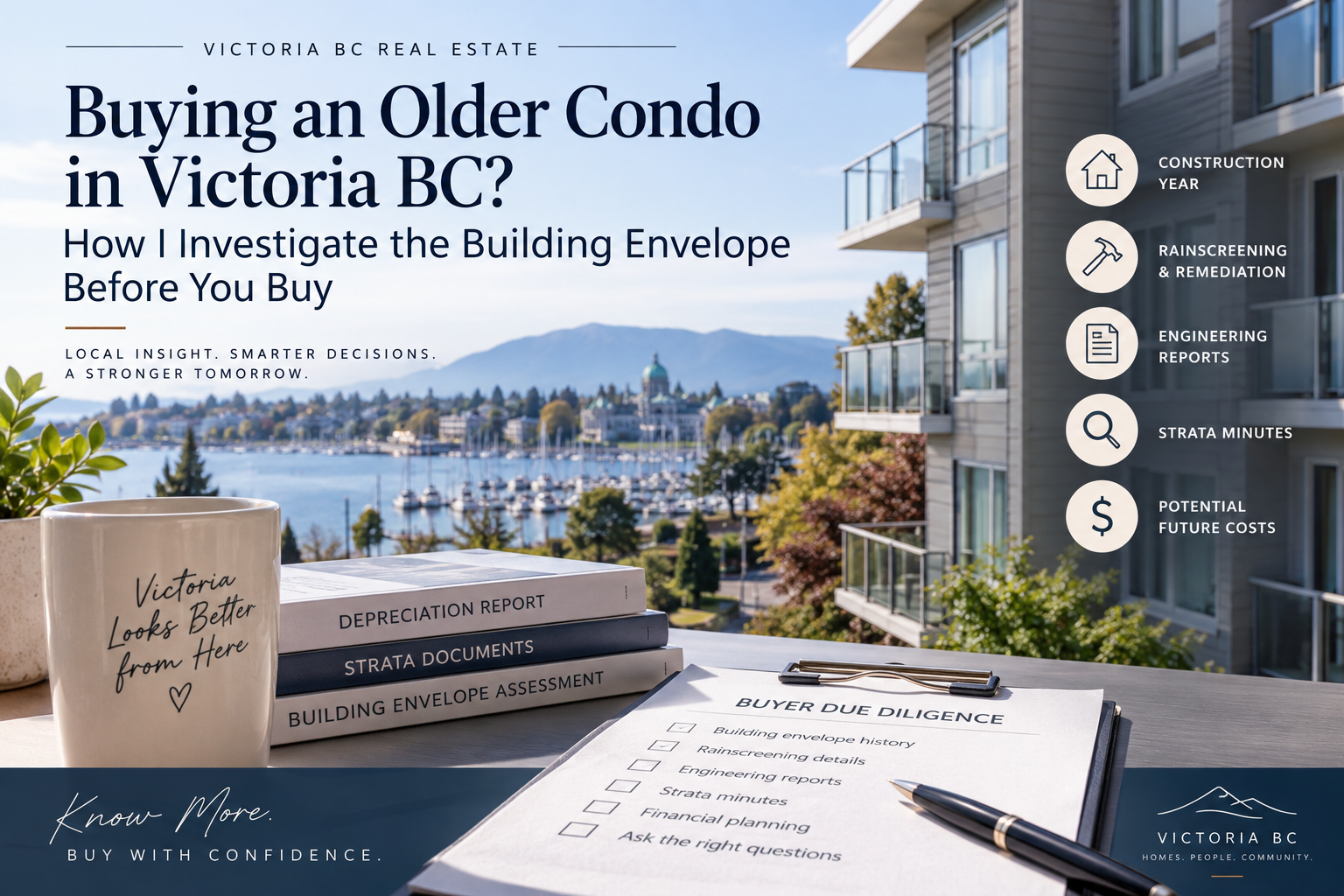
Buying an Older Condo in Victoria BC? How I Investigate the Building Envelope Before You Buy
An older condo can offer a fantastic location, larger floor plan and plenty of character. But when I'm helping a buyer consider an older strata property in Victoria, I don't just look at the suite. I want to understand the building.
One of the areas I pay particular attention to is the building envelope—the components that separate the inside of the building from Victoria's famously wet West Coast weather.
That can include exterior walls, windows, doors, balconies, roofs, flashings and other components designed to keep moisture out.
You may have heard terms such as rainscreened, building envelope remediation or even leaky condo. They can sound alarming, but those words alone don't tell me enough to decide whether a condo is a good or poor purchase.
What Is a Building Envelope?
Think of the building envelope as the protective shell around the building.
Its job is to manage water, air and moisture while protecting the structure and interior. In our coastal climate, that's particularly important.
When I'm helping a buyer assess an older Victoria condo, I'm interested not only in how the building looks today but also in its maintenance and repair history.
Why Does This Matter in Victoria?
Greater Victoria has a large inventory of strata buildings constructed over many decades. You'll find older condos throughout Victoria, Saanich, Fairfield, Oak Bay, Esquimalt and Sidney, among other communities.
Some buildings have undergone substantial exterior upgrades or building-envelope remediation. Others may have completed work in stages. Some may still have major components approaching the end of their expected service life.
That's why I don't believe a buyer should make a decision based simply on the age of a building.
The history of the building can be far more informative than the year on the front door.
How I Investigate an Older Condo for My Buyers
When we're considering an older strata property, there are several questions I want answered.
1. When Was the Building Constructed?
The construction date gives me a starting point, but it's not a conclusion.
From there, I want to know what has happened to the building since it was originally built. A well-maintained older building that has completed significant upgrades can tell a very different story from another property of exactly the same age.
2. Has the Building Been Rainscreened or Remediated?
If I see references to rainscreening or envelope remediation, my next question is: What exactly was done?
Was the entire exterior addressed, or only one elevation? Were windows replaced? Were balconies included? Was the roof part of the project? Who performed the work, and are there engineering reports or warranties available?
The word “remediated” by itself isn't enough. I want to understand the scope of the work.
3. What Do the Strata Minutes Tell Us?
This is where some detective work begins.
When reviewing strata documents, I look for repeated references to issues such as:
- water ingress or leaks
- window failures
- balcony repairs
- roof concerns
- caulking or flashing repairs
- engineering investigations
- building-envelope assessments
- insurance claims related to water
- discussion of upcoming exterior projects
- possible or approved special levies
One isolated repair isn't necessarily concerning. What I'm looking for are patterns.
BC's real estate regulator recommends that buyers considering a strata property review strata documentation, including at least two years of strata meeting minutes, so they can understand potential issues and how those issues might affect them.
4. Are There Engineering or Building-Envelope Reports?
If the minutes refer to an engineering report, building-envelope assessment or other professional investigation, I want to know whether we can obtain it.
The report may provide much more context than a short reference in meeting minutes.
I also watch for something buyers can easily miss: a report being discussed in the minutes without actually being included in the documents we've received.
That's a reason to ask more questions—not to make assumptions.
5. What Does the Depreciation Report Say?
A depreciation report helps a strata corporation plan for the repair and replacement of major common-property components over the long term.
For an older building, I pay attention to projected work involving items such as the exterior, roof, windows and other major components, as well as the estimated timing and costs.
This has become even more relevant for Victoria-area buyers. Under updated BC requirements, strata corporations with five or more lots are generally required to obtain depreciation reports on a five-year cycle. The strengthened rules are intended to give strata corporations—and prospective buyers—better information about future repair and replacement needs.
6. How Is the Strata Preparing Financially?
Finding out that a major project may eventually be required is only part of the picture.
I also want to understand how the strata plans to pay for it.
Does the contingency reserve fund appear to be part of the funding strategy? Has the strata discussed increasing contributions? Are owners considering a special levy? Has a levy already been approved?
For a buyer, these questions matter because the purchase price isn't the only cost of owning a condo.
What Is a Form B—and Why Do I Review It?
The Form B Information Certificate is one of the important documents involved in purchasing a BC strata property.
Among other things, it provides information about the strata lot and strata corporation, including strata fees, certain amounts owing, the contingency reserve fund, certain legal proceedings and information concerning parking and storage.
The current budget, strata rules and most recent depreciation report, if obtained, are also required attachments to the Form B.
Again, though, I don't treat one document as the whole story. The value comes from reading the documents together.
Does a Special Levy Mean I Shouldn't Buy the Condo?
Not necessarily.
This is an area where buyers sometimes react to the number before looking at the bigger picture.
A special levy can be significant, and you absolutely need to understand what you may be responsible for. But I also want to know what the levy is accomplishing.
Is the strata investing in a major project that could address an important building component for many years? Has the work already been completed? Is the current owner responsible for some or all of the levy under the contract?
Those details matter.
The Condo Can Be Beautiful. I Still Want to Know About the Building.
It's easy to walk into a renovated condo and fall in love with the new kitchen, flooring and view.
But granite counters won't tell you what's happening with the exterior walls.
When you're buying into a strata, you're purchasing your individual home and becoming an owner in the larger property.
That's why I spend time reviewing the building—not just the unit.
Questions I Recommend Asking Before Buying an Older Victoria Condo
- When was the building constructed?
- Has there been building-envelope remediation?
- Was the remediation full or partial?
- Were windows, balconies and exterior doors included?
- Are engineering or building-envelope reports available?
- Do the strata minutes mention recurring water ingress?
- What major projects are identified in the depreciation report?
- How much money is in the contingency reserve fund?
- Are any special levies being discussed or already approved?
- Are there major projects anticipated in the next several years?
You don't have to know how to interpret all of this before you begin looking for a condo. That's part of the reason experienced representation matters.
Frequently Asked Questions
What does “rainscreened” mean?
In simple terms, a rainscreen wall assembly is designed to help manage moisture by providing drainage and ventilation behind the exterior cladding. If a listing says a building has been rainscreened, I still want to understand the scope and date of the work rather than relying on the term alone.
Should I avoid older condos in Victoria?
No. Age alone doesn't tell you whether a strata is well maintained. I would rather investigate the building's maintenance history, financial planning, completed projects and anticipated work before reaching a conclusion.
Is a building-envelope problem always visible during a showing?
No. A showing can tell us a great deal about the individual unit, but important information about the larger building may be found in strata documents, professional reports and inspections.
Can a depreciation report tell me whether a condo is a good purchase?
A depreciation report provides valuable information about major components, anticipated repairs and projected costs, but it is only one part of the due-diligence process. I prefer to consider it alongside the strata minutes, Form B, financial information and other relevant reports.
What documents should I review before buying a strata property in BC?
Depending on the property and transaction, important documents can include the Form B and its attachments, strata bylaws and rules, financial statements, meeting minutes, insurance information, depreciation report and relevant engineering or maintenance reports. The appropriate due diligence depends on the particular property.
Useful BC Strata Resources
If you'd like to learn more about strata ownership and depreciation reports, these are useful independent resources:
- Province of British Columbia – Strata Depreciation Reports
- BC Financial Services Authority – Real Estate Consumer Resources
Thinking About Buying a Condo in Victoria?
I can help you look beyond the finishes and understand the property you're actually buying. My approach is to guide, investigate and explain so you can make an informed decision with confidence.
Explore Victoria Real EstateDawn Stokkeland | REALTOR®
Dawn Stokkeland is a Victoria BC REALTOR® with eXp Realty, helping buyers and sellers throughout Greater Victoria. Her approach is centred on education, careful due diligence and straightforward advice so clients understand their options and can make informed real estate decisions.
Serving Victoria, Saanich, Gordon Head, Cordova Bay, Cadboro Bay, Oak Bay, Fairfield, Fernwood, Royal Oak, Esquimalt, Sidney and surrounding Greater Victoria communities.
```
Categories
Recent Posts





REVIEWS