
Buying a Home With a Heat Pump in Victoria BC? Check Its Heating History
```html
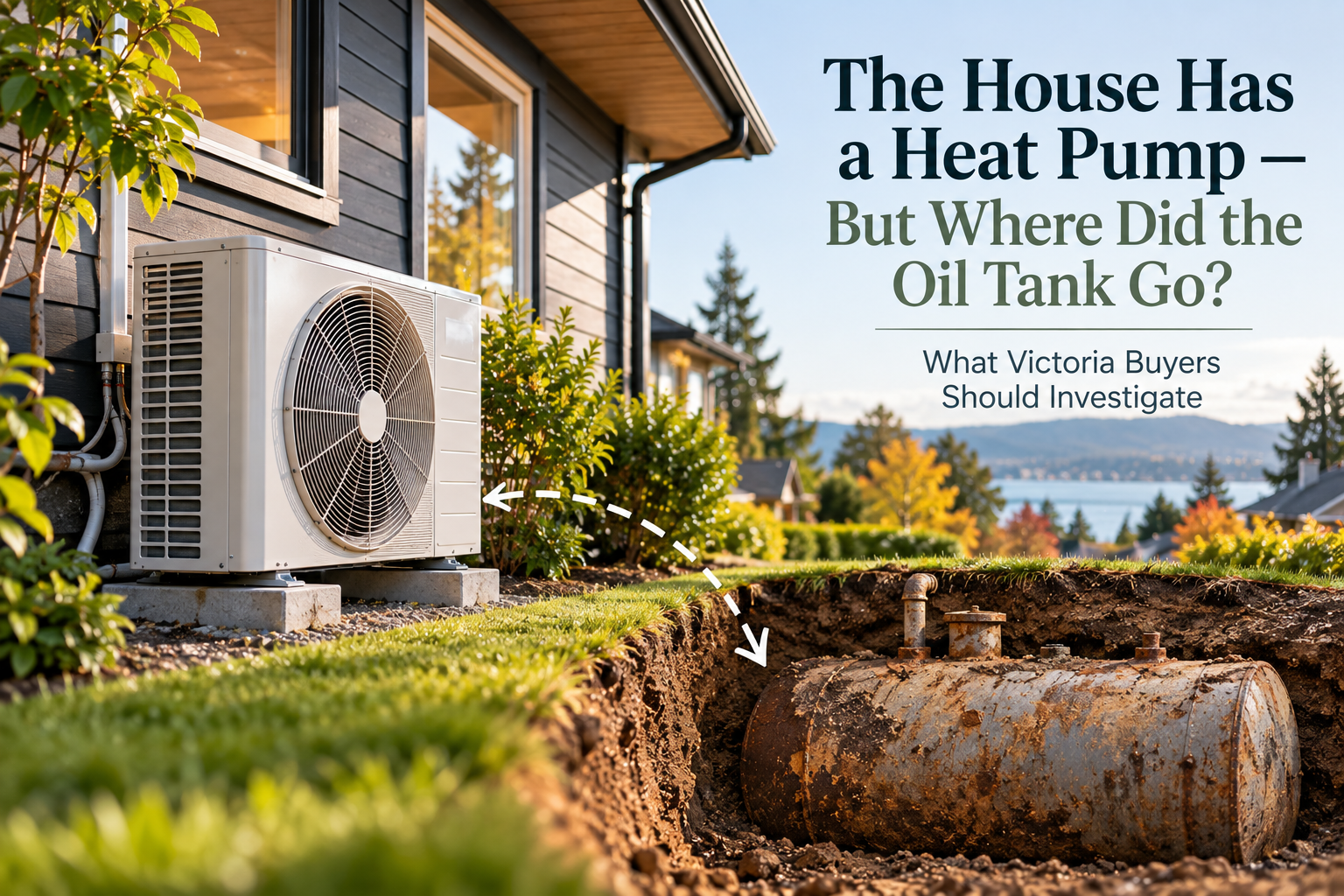
The House Has a Heat Pump — But Where Did the Oil Tank Go?
A heat pump can be a great feature in a Victoria home. But when I am helping a buyer investigate an older property, seeing a newer heat pump can lead me to another question: How was this house heated before?
Many older homes throughout Greater Victoria were once heated with oil. Some have since been converted to heat pumps, electric baseboards, natural gas or another heating system.
The new heating system may be obvious. The history of the old one may not be.
When I see a heat pump in an older Victoria home, one of the questions I want answered is: What heating system did it replace, and is there documentation showing what happened to it?
A Heat Pump Tells Us About the House Today
It doesn't necessarily tell us about the house 20, 30 or 50 years ago.
That's an important distinction when buying an older home.
If the property was previously heated with oil, I want to understand where the oil was stored. Was there an above-ground tank? Was there an underground tank? When was it removed? Who removed it? Were permits or inspections required? And are there records available?
This is the type of property history that can easily be missed if everyone focuses only on the shiny new heat pump sitting outside.
Why Were Oil Tanks So Common in Victoria?
Oil heating was used in many older Greater Victoria homes. As heating technology changed, homeowners gradually converted to other systems.
Today, a home may have a modern heat pump and no visible sign that oil was ever used.
That's why I don't assume that the current heating system tells the whole story.
The Question Isn't Just “Is There an Oil Tank?”
Sometimes buyers hear the words oil tank and immediately think about finding a buried tank in the yard.
But the due-diligence question can be broader:
- Was the house previously heated with oil?
- Where was the tank located?
- Was it above ground or underground?
- Was the tank professionally removed?
- Are there municipal or contractor records?
- Was the surrounding soil inspected or tested when appropriate?
- Were there any indications of leakage or contamination?
In other words, I am looking for the paper trail as well as the physical evidence.
What If the Seller Says the Tank Was Removed Years Ago?
That's useful information, but I still like to see whether it can be supported by documentation.
Depending on the property, the municipality and when the work was completed, there may be permits, inspection information, invoices, contractor reports or other records available.
Older work can sometimes be more difficult to document, so the absence of a record does not automatically tell us what happened. It simply tells us that we may need to investigate further.
Why Does Soil Testing Matter?
The concern with an old oil tank isn't simply the tank itself. It's whether fuel may have leaked into the surrounding soil.
If an underground tank was removed, information about the condition of the tank and surrounding soil can therefore be important.
If there is evidence or concern about contamination, this moves beyond normal REALTOR® due diligence and into an area where the appropriate environmental, municipal and legal professionals may need to be involved.
Can Municipal Records Help?
They can be an important part of the investigation.
When I'm researching an older property for a buyer, I may look at available municipal property information and permit history to see whether there is documentation relating to heating-system changes or an oil-tank removal.
Records can vary depending on the municipality, the age of the work and what information was retained. That's why municipal records are one piece of the investigation rather than the only piece.
Look Around the Property Too
Documents are important, but so is the physical property.
Depending on the house, there may be clues that suggest a previous oil-heating system. These could include old fill or vent pipes, patched areas, former equipment locations or other remnants of an earlier system.
A qualified home inspector may also identify evidence that warrants further investigation.
Why This Matters Before You Remove Subjects
Subject conditions give buyers an opportunity to investigate important aspects of a property before becoming fully committed to the purchase.
If the heating history raises questions, I would rather investigate those questions during due diligence than have my buyer discover them after completion.
Depending on what we find, further investigation could involve the municipality, a home inspector, an environmental professional, the buyer's insurer, or legal advice.
What I Investigate for My Buyers
My role isn't to certify that a property is environmentally clear. My role is to notice the questions that deserve investigation, help gather the available information, and make sure my buyers know when additional professional advice may be appropriate.
What If the Oil Tank Was Above Ground?
An above-ground tank can present a different situation from a buried tank, but I still want to understand the history.
Where was it located? When was it removed? Was there any evidence of leakage? Are there records from the conversion to the current heating system?
Again, the goal isn't to assume there's a problem. It's to understand the property before making a major financial decision.
Sellers Can Benefit From Investigating This Too
This isn't only a buyer issue.
If you're preparing an older Victoria home for sale and know that it was once heated with oil, gathering any available documentation before listing can be very helpful.
A buyer may ask the same questions I would ask on their behalf. Having information available early can make the due-diligence process clearer and reduce uncertainty during a transaction.
Dawn's Take
I love seeing a heat pump when I'm viewing a home with a buyer. It's an efficient, modern heating and cooling system and can be a meaningful improvement to an older property.
But I don't want the new equipment to distract us from understanding the history of the house.
If a home was built during an era when oil heating was common, I want to know what came before the heat pump and what happened when the old system was removed. Sometimes the answer is straightforward and well documented. Sometimes it leads to another question. Either way, I'd rather ask before my buyer removes subjects than after they own the house.
Frequently Asked Questions
How do I know if a Victoria home once had an oil tank?
Start with the age and heating history of the property. Seller information, municipal records, permits, invoices, home inspections and physical clues around the property may all help establish whether oil heating was previously used.
Does Saanich keep records of old oil tanks?
Some historical permit and property information may be available through Saanich, depending on when the work occurred and what records were retained. Municipal records should be considered one part of the overall investigation.
If an underground oil tank was removed, should there be paperwork?
There may be permits, inspection records, contractor invoices, removal documentation or environmental information, depending on when and how the work was completed. Older removals may not have the same documentation as more recent work.
Why is soil testing important when an oil tank is removed?
Soil information can help determine whether fuel may have leaked from a tank into the surrounding ground. If contamination is suspected, appropriate environmental and other qualified professionals should be consulted.
Does having a heat pump mean there is no longer an oil-tank concern?
No. A heat pump tells you how the home is heated now. An older home may previously have used oil, so understanding the property's heating history can still be worthwhile.
Should a seller investigate an old oil tank before listing?
If a seller knows the property previously used oil, gathering available records before listing can help answer questions that may arise during a buyer's due diligence.
Buying an Older Home in Victoria?
Older homes can have incredible character, but they can also come with systems and property history that deserve a closer look. I help my buyers understand what questions to ask and what information to investigate before making a decision.
Get in Touch With DawnDawn Stokkeland, REALTOR® | eXp Realty | Victoria, BC
Helping Greater Victoria buyers and sellers make informed real estate decisions with thoughtful research, local knowledge and a calm, no-pressure approach.
This article is provided for general educational purposes only and is not legal, environmental, engineering, insurance or inspection advice. Property conditions, municipal records and requirements vary. Buyers and sellers should obtain advice from the appropriate municipality and qualified professionals for the specific property.
```
Categories
Recent Posts









REVIEWS