
Buying a House in Victoria, BC: A Practical Guide for Today's Buyers
Buying a house in Victoria, BC is exciting, but it can also feel overwhelming. Between home prices,
mortgage rules, neighbourhood choices, inspections, strata documents, property transfer tax, and offer
strategy, there is a lot to understand before you make a move.
The good news is that Victoria’s current real estate market is giving buyers more room to think, compare,
and negotiate than they had during the ultra-competitive pandemic years. According to the Victoria Real
Estate Board, 719 properties sold in the region in June 2026, while active listings reached 4,054, up 7.3%
from June 2025. VREB described the market as active and balanced, with buyers having “more options and
more time to make informed decisions.”
Whether you are a first-time home buyer, moving up from a condo, relocating to Vancouver Island, or
searching for your forever home in Greater Victoria, here is what you need to know before buying a house
in Victoria, BC.
1. Understand the Victoria Real Estate Market Before You Start
Victoria is one of Canada’s most desirable housing markets, and for good reason. Buyers are drawn to the
oceanfront lifestyle, walkable neighbourhoods, mild climate, strong local economy, universities,
government employment, and easy access to nature.
But “Victoria” is not just one market. Buying a character home in Fairfield, a condo downtown, a family
home in Saanich, a townhouse in Langford, or an acreage on the Saanich Peninsula can involve very
different price points and negotiation strategies.
As of June 2026, VREB reported that the MLS® Home Price Index benchmark value for a single-family home
in the Victoria Core was $1,326,500, down 0.6% from June 2025. The benchmark value for a condominium in
the Victoria Core was $549,200, down 1.9% year over year.
For buyers, this means the market is not necessarily “cheap,” but it is more balanced. You may have more
selection, more time to review properties, and more ability to negotiate than buyers had a few years ago.
2. Get Pre-Approved Before You Tour Homes
Before you fall in love with a home, speak with a mortgage broker or lender and get pre-approved. A pre-
approval helps you understand your price range, estimated monthly payment, down payment
requirements, and closing costs.
This step is especially important in Victoria because small differences in purchase price can have a major
impact on your monthly budget. A home listed at $799,000 may come with very different total costs than
1one listed at $899,000 once you factor in mortgage payments, insurance, property taxes, strata fees,
utilities, maintenance, and property transfer tax.
A strong pre-approval also helps you move quickly when the right home appears. Even in a balanced
market, well-priced homes in desirable Victoria neighbourhoods can still attract serious attention.
3. Budget for More Than the Down Payment
Many buyers focus on the down payment, but closing costs are just as important. In British Columbia,
buyers should plan for costs such as legal fees, home inspection fees, appraisal fees, moving expenses,
insurance, adjustments, and property transfer tax.
BC’s general property transfer tax is calculated as 1% on the first $200,000 of fair market value, 2% on the
portion greater than $200,000 and up to $2,000,000, and 3% on the portion greater than $2,000,000. A
further 2% applies to residential property value over $3,000,000.
First-time buyers may qualify for a property transfer tax exemption or reduction. The BC First Time Home
Buyers’ Program may reduce or eliminate property transfer tax for eligible buyers purchasing their first
home. To qualify for the main exemption, the property must be used as a principal residence and have a fair
market value of $835,000 or less, among other requirements.
For eligible first-time buyers, the exemption amount depends on the property value. For example, if 100%
of the property transfer is eligible, homes valued at $500,000 or less may receive a full exemption, while
homes over $500,000 and up to $835,000 may receive an $8,000 exemption.
4. Choose the Right Victoria Neighbourhood for Your Lifestyle
Buying a home in Victoria is not just about bedrooms, bathrooms, and square footage. It is about lifestyle.
Before you start viewing homes, think carefully about what matters most to you:
Do you want walkability to shops, cafés, and the Inner Harbour? Downtown Victoria, James Bay, Vic West,
and Fairfield may be worth exploring.
Do you need space for a growing family? Saanich, Gordon Head, Royal Oak, Colwood, View Royal, and
Langford may offer more options.
Do you want a quieter, more residential feel? Oak Bay, Cordova Bay, Broadmead, and the Saanich Peninsula
may appeal to you.
Do you want newer construction or townhome options? Langford, Colwood, and the Westshore often
provide more modern inventory than the Victoria Core.
The best neighbourhood is not always the most popular one. It is the one that fits your budget, commute,
lifestyle, schools, outdoor preferences, and long-term plans.
25. Know the Difference Between Freehold, Strata, and Leasehold
In Victoria, buyers will commonly encounter freehold homes, strata properties, and occasionally leasehold
properties.
A freehold detached home typically gives you ownership of the home and land, along with full responsibility
for maintenance, repairs, insurance, landscaping, and future updates.
A strata property, such as a condo or townhouse, usually includes shared ownership of common property.
You will pay monthly strata fees and follow strata bylaws. Before buying a strata property in Victoria, review
the strata documents carefully, including meeting minutes, depreciation reports, insurance summaries,
financial statements, bylaws, contingency reserve fund details, and any upcoming special levies.
A leasehold property can be more complex. You may own the right to occupy the property for a set period,
but not the land itself. These properties can affect financing, resale value, and long-term planning, so
professional guidance is essential.
6. Always Do Your Due Diligence
A beautiful home can still come with hidden issues. In Victoria, buyers should pay close attention to age,
drainage, perimeter drains, roof condition, electrical systems, plumbing, oil tanks, insulation, windows,
moisture, foundation concerns, and possible unpermitted renovations.
For older homes, especially character homes, a professional home inspection is strongly recommended. For
strata properties, document review is just as important as the physical condition of the unit.
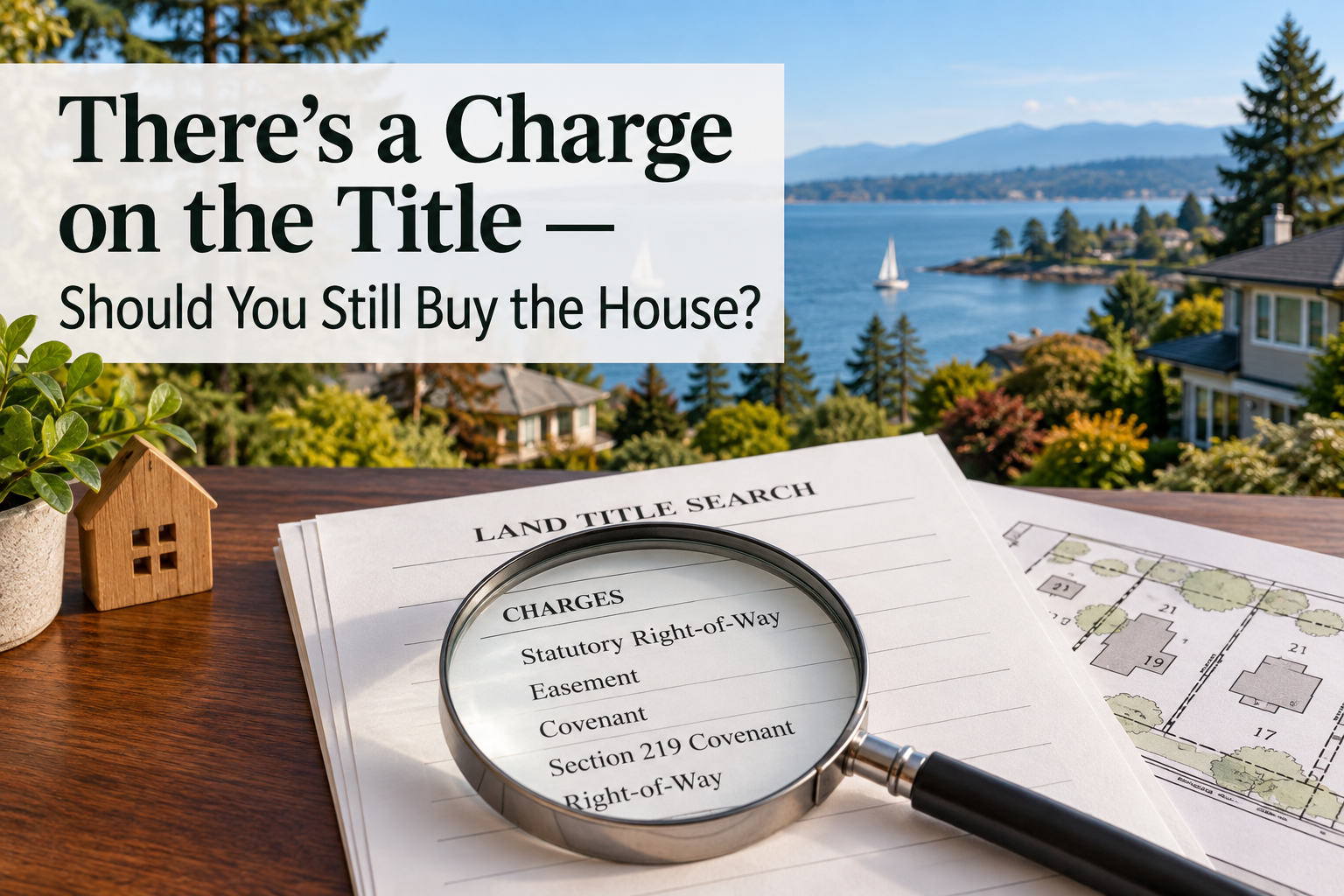
Depending on the property, you may also want to investigate zoning, future development nearby, suite
legality, heritage status, easements, title charges, building permits, flood or slope concerns, and insurance
availability.
In a balanced market, buyers may have more opportunity to include protective conditions in their offer.
These can include financing, inspection, insurance, title review, property disclosure review, and strata
document review.
7. Build a Smart Offer Strategy
Buying a house in Victoria, BC is not only about finding the right property. It is also about writing the right
offer.
Your offer strategy should consider the home’s market value, days on market, competing interest, recent
comparable sales, property condition, seller motivation, possession dates, included items, deposit amount,
and subjects.
In a fast-moving situation, a clean and confident offer may help you stand out. In a slower-moving situation,
you may have room to negotiate on price, dates, repairs, inclusions, or conditions.
3The key is knowing which type of market you are dealing with at the property level. Even when the overall
Victoria market is balanced, some homes still sell quickly, while others sit for weeks or require price
adjustments.
8. Think Long-Term, Not Just Right Now
A home is both a lifestyle decision and a financial decision. Before buying, ask yourself how long you plan to
stay, whether the home can adapt to your needs, and how it may perform in different market conditions.
Think about future resale appeal. Homes close to schools, transit, parks, beaches, employment hubs, and
village centres tend to have broad buyer appeal. Functional layouts, good natural light, parking, storage,
outdoor space, and well-managed strata corporations can also make a difference.
In Victoria, lifestyle-driven demand is a major factor. Many buyers are not just purchasing a property; they
are buying into the Vancouver Island way of life.
9. Work With Local Professionals
Buying a home in Victoria involves many moving parts. Having the right team can make the process
smoother and less stressful.
Your team may include a local REALTOR®, mortgage broker, real estate lawyer or notary, home inspector,
insurance provider, accountant, and contractor if renovations are part of your plan.
Local expertise matters because Victoria’s housing market is highly neighbourhood-specific. A
knowledgeable local professional can help you compare value, identify red flags, understand current
market conditions, and negotiate with confidence.
Final Thoughts: Buying in Victoria Is About Preparation
Buying a house in Victoria, BC can be one of the best decisions you ever make, but preparation is
everything. Understand the market, get pre-approved, know your closing costs, choose the right
neighbourhood, complete your due diligence, and build an offer strategy that protects your interests.
Today’s Victoria real estate market offers buyers more choice than they had during the low-inventory years.
That creates opportunity, but the best results still go to buyers who are informed, prepared, and guided by
strong local advice.
Ready to start your home search in Victoria, BC? Connect with a trusted local real estate professional who
can help you understand your options, compare neighbourhoods, and move forward with confidence
Categories
Recent Posts




REVIEWS