
"Older home in Victoria BC with landscaped front yard illustrating the importance of checking for buried oil tanks before buying or selling."
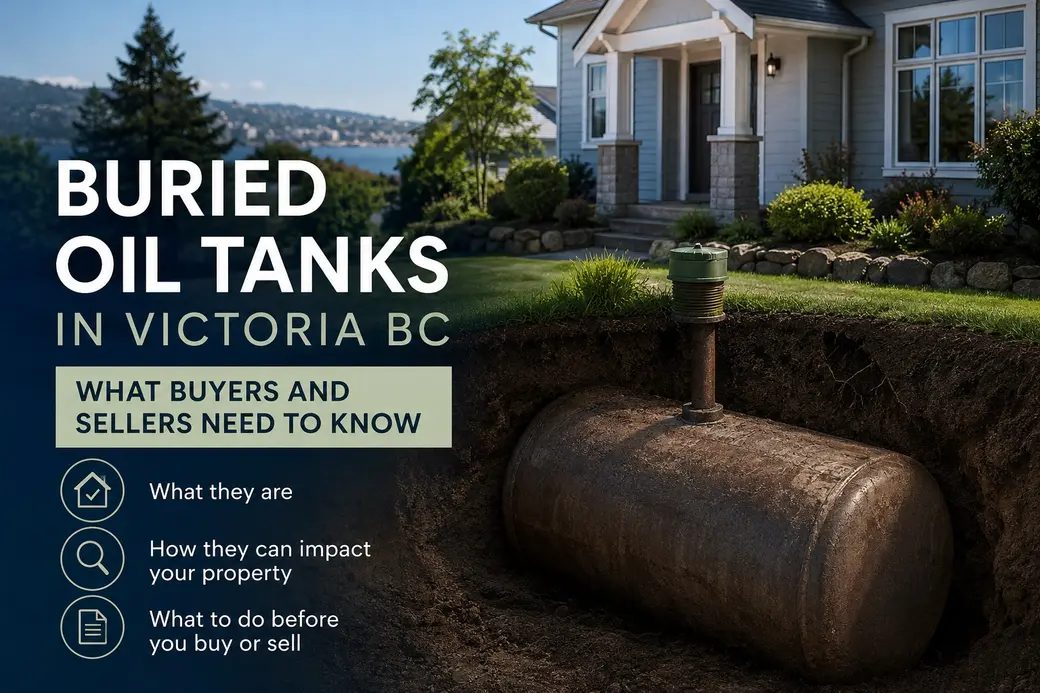
Buried Oil Tanks in Victoria, BC: What Every Home Buyer and Seller Needs to Know
Meta Title: Buried Oil Tanks in Victoria BC | Guide for Home Buyers and Sellers
Meta Description: Learn how buried oil tanks affect buying and selling homes in Victoria, BC. Discover the risks, costs, inspections, and what buyers and sellers should know before making a move.
Buried Oil Tanks in Victoria, BC: Why They Still Matter
If you're buying or selling an older home in Victoria, BC, one question can have a surprisingly large impact on the transaction:
"Is there an underground oil tank on the property?"
Many homes built before the 1960s throughout Victoria, Saanich, Oak Bay, Esquimalt, and other established neighbourhoods were originally heated with oil. At the time, underground fuel storage tanks were common. As homes converted to natural gas or electric heat, many of these tanks were removed—but many others were simply abandoned underground.
Today, these forgotten tanks remain one of the biggest environmental risks associated with older homes.
As a Victoria Realtor, I always encourage buyers and sellers to understand this issue before it becomes an expensive surprise.
Why Are Buried Oil Tanks a Concern?
An underground oil tank may have been sitting beneath a property for decades.
Over time, steel tanks naturally corrode. If the tank leaks, heating oil can contaminate the surrounding soil and even migrate onto neighbouring properties.
This isn't simply a maintenance issue—it can become an environmental liability that costs thousands or even tens of thousands of dollars to remediate depending on the extent of contamination.
The City of Victoria notes that underground residential oil tanks typically have a lifespan of about 15 to 25 years, after which corrosion significantly increases the risk of leaks.
Which Victoria Neighbourhoods Are Most Likely to Have Buried Oil Tanks?
While a buried tank can potentially exist anywhere, they are more commonly found in established neighbourhoods with older homes, including:
- Gordon Head
- Oak Bay
- Fairfield
- Saanich
- Esquimalt
- View Royal
- James Bay
- Fernwood
- Vic West
If a home was built before approximately 1960, it is worth asking questions about its heating history. Even homes built later can occasionally have tanks because of subdivision history or previous property configurations.
What Should Home Buyers Do?
Buying an older home doesn't automatically mean you should walk away.
It simply means you should perform proper due diligence.
Ask the Seller
Ask whether the property:
- Ever used oil heat
- Had an underground oil tank
- Has documentation proving the tank was removed
- Has environmental reports available
Watch for Warning Signs
Home inspectors may notice clues such as:
- Old fuel lines entering the basement
- Capped pipes
- Oil fill pipes near the front of the house
- Vent pipes that no longer serve a heating system
These signs don't confirm a buried tank, but they justify further investigation.
Consider an Oil Tank Scan
If there's any uncertainty, buyers often arrange a professional underground oil tank scan before removing subjects.
These scans are relatively inexpensive compared to the financial risk of discovering a leaking tank after taking possession.
The BC Financial Services Authority (BCFSA) specifically recommends discussing concerns with your REALTOR® and considering contractual subjects, such as an environmental inspection or holdback, if a buried tank is suspected.
What Should Sellers Know?
Many homeowners genuinely have no idea an oil tank exists beneath their property.
That's understandable.
However, once a seller becomes aware of a buried tank—or evidence suggesting one may exist—they should discuss it with their REALTOR®.
If a leaking oil tank represents a material latent defect, it may need to be disclosed to prospective buyers before entering into a contract.
Being proactive often creates a smoother transaction.
Some sellers choose to:
- Complete an oil tank scan before listing
- Remove the tank before marketing the property
- Provide documentation showing the tank was professionally removed years earlier
Having documentation readily available can give buyers greater confidence and reduce the likelihood of negotiations falling apart.
Does Every Buried Tank Need to Be Removed?
Not necessarily.
Every property is different.
Some tanks were professionally removed decades ago.
Others were abandoned in accordance with standards that existed at the time.
If a tank is discovered, environmental professionals can recommend the most appropriate course of action based on current regulations and the property's condition.
The City of Victoria and the District of Saanich both provide guidance on permits and requirements related to underground oil tanks and encourage removal of unused tanks because of environmental risks.
Can a Mortgage or Sale Be Affected?
Sometimes.
A suspected buried oil tank may cause:
- Additional inspections
- Delays during subject removal
- Requests for environmental reports
- Renegotiation between buyer and seller
In some cases, lenders or insurers may require further information before proceeding, particularly if contamination is suspected.
The key is identifying potential issues early rather than discovering them just before closing.
Frequently Asked Questions
How do I know if my Victoria home has a buried oil tank?
You may notice old fill pipes, vent pipes, or evidence the home once used oil heat. Municipal records or a professional oil tank scan may also provide answers.
Are buried oil tanks common in Victoria?
Yes. They are relatively common in older neighbourhoods where homes were originally heated with furnace oil before natural gas and electric heating became widespread.
Should I avoid buying a house with a buried oil tank?
Not necessarily. The important step is understanding the situation before removing subjects. Professional inspections and environmental advice help buyers make informed decisions.
Is removing a buried oil tank expensive?
Costs vary depending on whether contamination is present. A straightforward removal is generally much less expensive than remediation of contaminated soil, which can become a significant environmental expense.
Final Thoughts
Buried oil tanks don't have to derail a real estate transaction—but they should never be ignored.
Whether you're buying or selling an older home in Victoria, Saanich, Oak Bay, or anywhere in Greater Victoria, understanding the property's heating history can prevent unexpected costs and provide peace of mind.
One of the biggest advantages of working with an experienced local REALTOR® is knowing which questions to ask before they become problems.
If you're considering buying or selling an older Victoria home and want to understand potential oil tank risks, I'd be happy to guide you through the process and connect you with the right professionals when needed.
Categories
Recent Posts









REVIEWS